




1. Break the stigma Only when the one-sided stigma of loss disappears will people with dementia come out on top. Stigma causes isolation from social life. On average, people live for between 8 and 10 years after a diagnosis, so ensure they can spend this time with their heads held high. Let’s design campaigns differently to create a more inclusive society. Not out of fear, but based on a fairer picture that helps people move forward.
2. Prioritise quality of life The aim should not be to keep people alive for as long as possible, but to ensure they live as well as possible. Even if this involves risks, discuss them openly and do not make decisions for someone else. Risks are part of life, including a good life with dementia. Feeling that one matters is vital; otherwise, dementia effectively means social death at an early stage. It is up to all of us to prevent that.
3. Open the doors Closed wards literally cut people with dementia off from ‘normal’ life, whereas that is precisely what must continue as much as possible. There are already many wonderful initiatives that show things can be done differently; let us make them the standard within the next four years. Closing doors is the easiest thing we can do, because then we never have to ask the question: which risks are acceptable for this person and which are not? Safety remains important, but it must be more in balance with a person’s quality of life.
4. Give people back their voice People living with dementia are not mad,so do not treat them as such! Do not talk about them, but with them. Only then do ‘person-centred care’ or ‘self-determination’ take on meaning. A diagnosis of a form of dementia must not mean that all forms of self-determination disappear. The voice of someone with dementia is not always the same as that of their legal representative; make sure there is still room for this.
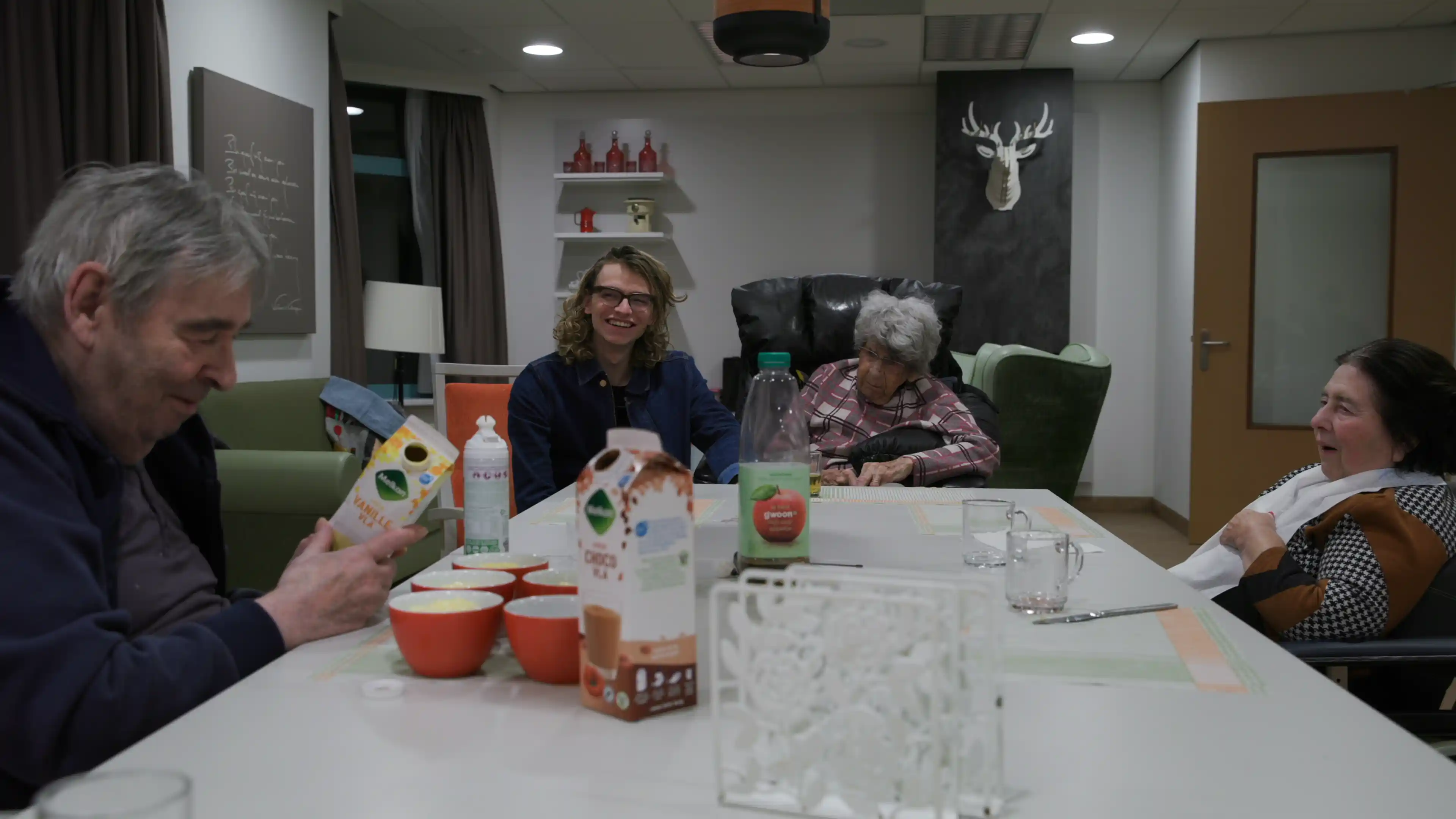
5. Build inclusively Get rid of the high fences around care homes and integrate them more into the neighbourhood.After all, it is not dangerous criminals who live here, but lovely grandfathers and grandmothers, uncles and aunts, fathers and mothers who want to remain part of society. Attention makes everything better, and that applies to people too,so ensure they can receive it by redesigning our neighbourhoods. A friendlier atmosphere does not push people away, but invites them in.
6. Reward a good life Remove the perverse financial incentive from the care assessment system. By allocating more funds for higher care intensity,the focus of care shifts in the wrong direction and we sometimes unintentionally or unconsciously make people more dependent than necessary. We cannot expect a good life to be the result of our system if we continue to fund solely on the basis of care intensity. Therefore, make the incentives in the funding system more diverse based on quality of life, health and prevention, so that care organisations adapt their models and community living takes centre stage.
7. Keep moving Prevention is better than cure, especially for these already vulnerable people, so ensure that residents in care homes keep moving. This improves mobility, strengthens muscles, reduces the risk of falls, prevents constipation and contributes to a healthy immune system. Use your muscles, or you’ll lose them. Making exercise part of everyday life reduces the medicalisation of this universal need.
8. Support the loved ones Ensure that the loved ones of people with dementia can care for their relatives and do not get bogged down in the red tape of the many different agencies that are supposed to make this possible. Provide a single, transparent system so that the informal carer is properly supported during this difficult phase. Do not use language that creates distance, but rather closeness. Relationships should be at the heart of everything we do.
9. Take dementia out of the care sector Dementia is not a problem for the care sector, but for our society. Provide a social safety net, enabling people to live their ‘normal’ lives for as long as possible. Ensure that employers, sports and music clubs, supermarkets, town halls, the police, hospitals and insurers become part of a society in which people with dementia are included. Living together is the key to survival.
10. Make it a political priority Make dementia a political priority. People not only deserve this, it is necessary. At present, it is barely discussed, yet it must be a priority for the next twenty years. If we do not reorganise society now, it will be too late! The large number of people who will be affected will lead to disruptive situations in daily life. People with dementia are not the problem; our approach to them is, and we hold the key to change in our own hands.
 Go to Human Forever